










What we buy: DDR3, DDR4, DDR5 and SO-DIMM for laptops
RAM buyout in Almaty at Topcash covers all current generations — from budget DDR3 to top-end DDR5, including laptop SO-DIMM. Let's break down which formats and kits we accept and how they differ in price.
Which memory generations we accept: DDR3, DDR4, DDR5
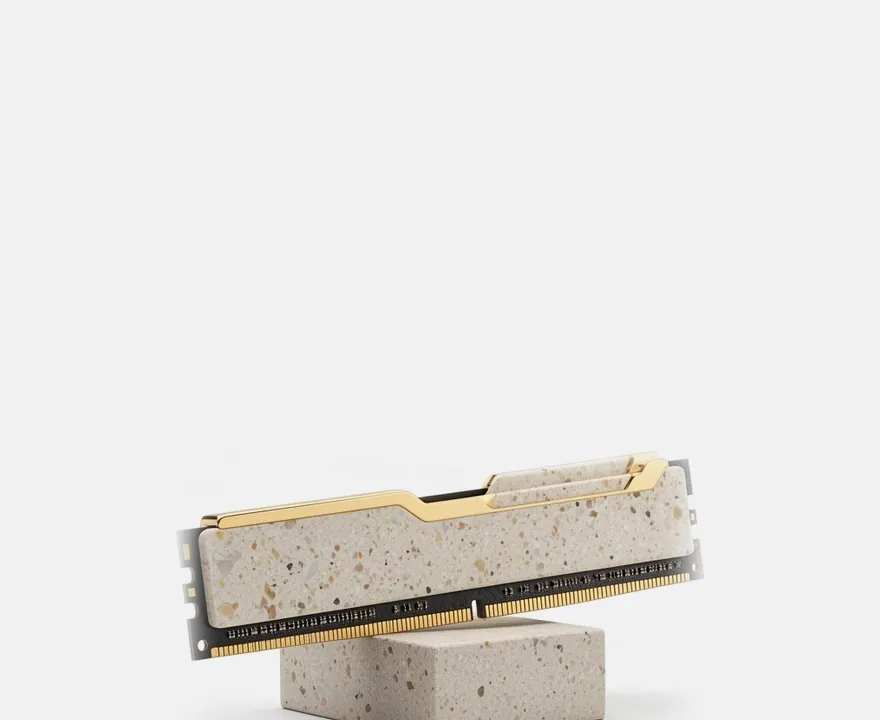
At Topcash, we accept three generations — DDR3, DDR4 and DDR5, and the payout gap between the extremes reaches 30 times: for DDR3 8 GB 1600 MHz we pay up to 5 000 ₸, for a top kit 64 GB (2×32) 6000 MHz — up to 150 000 ₸. Within the DDR4 line, prices range from 10 000 ₸ for an 8 GB 3200 MHz module to 45 000 ₸ for a 2×16 GB 3600 MHz kit, while DDR5 16 GB 5600 MHz goes up to 38 000 ₸. The generation is identified by the marking on the stick and by the notch on the contact edge — these types are physically incompatible with each other. So when getting an appraisal, state the exact type, not just the capacity: a photo of one side without a readable marking will make the appraiser quote a price with a downward margin.
SO-DIMM from laptops: we buy short sticks too
Yes, we buy SO-DIMM — the shortened sticks from laptops and mini-PCs; for SO-DIMM DDR5 16 GB we pay up to 30 000 ₸, for SO-DIMM DDR4 16 GB — up to 18 000 ₸. A laptop module is about half the length of a desktop one, and that's the main visual sign when appraising by photo. If you're removing the stick from the case, place it with the marking facing up and shoot in daylight — readability drops on a dark background. In our orders, people most often bring SO-DIMM DDR4 8 GB from laptops after upgrading to 16 GB: such sticks come in batches of 2-3. Before sending a photo, check that the stick is detected by the system — we appraise a working one higher than a faulty one, which we take for parts only.
A single stick or a kit: what's more profitable to sell
- Single stick: we buy any capacity — from DDR3 8 GB to DDR5 32 GB, appraised by model, frequency and condition of the module.
- Matched kit 2×16: for two identical sticks of the same model and capacity we pay more than for the same modules separately.
- Kit with the box: a set in packaging with documents is appraised higher — mention this right away, before the check.
- Mixed models in a pair: if the sticks are from different manufacturers or have different frequencies, we count them as two single modules.
- Check before the deal: at the branch we test the sticks in front of you in 10-20 minutes and confirm the price quoted from the photo.
How much we pay: payout table by memory model
The amount depends on type, capacity and frequency. Below are payouts for popular configurations: from budget DDR3 to a top-end DDR5 64 GB kit, including laptop SO-DIMM.
Payout table by RAM model
| Memory model | Type | Capacity | Frequency | We pay up to, ₸ |
|---|---|---|---|---|
| DDR5 64 GB (2×32) | DDR5 | 64 GB | 6000 MHz | 150 000 |
| DDR5 32 GB (2×16) | DDR5 | 32 GB | 6000–6400 MHz | 90 000 |
| DDR5 32 GB (2×16) | DDR5 | 32 GB | 5600 MHz | 75 000 |
| DDR4 32 GB (2×16) | DDR4 | 32 GB | 3600 MHz | 45 000 |
| DDR5 16 GB | DDR5 | 16 GB | 5600 MHz | 38 000 |
| SO-DIMM DDR5 16 GB | DDR5 SO-DIMM | 16 GB | — | 30 000 |
| DDR4 16 GB | DDR4 | 16 GB | 3200 MHz | 22 000 |
| SO-DIMM DDR4 16 GB | DDR4 SO-DIMM | 16 GB | — | 18 000 |
| DDR4 8 GB | DDR4 | 8 GB | 3200 MHz | 10 000 |
| DDR3 8 GB | DDR3 | 8 GB | 1600 MHz | 5 000 |
The amounts are the upper limit for a top model in excellent condition with box and documents; the final price is confirmed after testing the sticks in front of you.
How much we give for DDR4 16 GB and DDR5 32 GB
For a 16 GB 3200 MHz module Topcash pays up to 22 000 ₸, for a DDR5 32 GB kit (2×16) 6000–6400 MHz — up to 90 000 ₸, almost a fourfold difference. In between is a 16 GB 5600 MHz module — up to 38 000 ₸, while a single DDR4 8 GB of the same generation is valued at 10 000 ₸. Frequency matters more than capacity: a 2×16 pair at 6400 MHz costs 15 000 ₸ more than the same kit at 5600 MHz. If you're unsure about the frequency, check the marking: for DDR5 it starts at 4800 MHz, for mainstream DDR4 — at 2400–3200 MHz. State the frequency precisely — the final amount depends on it.
What the price depends on: type, frequency, condition and kit
Two sticks of the same capacity can cost differently — the gap reaches 40–50%. Let's break down the factors that affect the appraisal: from generation and frequency to condition and completeness.
What the price depends on: condition, bundle and year of release
- Memory type: a budget 8 GB 1600 MHz module is valued up to 5 000 ₸, a mid-range 16 GB 3200 MHz — up to 22 000 ₸, a top-end 32 GB 6000–6400 MHz kit — up to 90 000 ₸.
- Capacity and kit: paired modules of the same model and capacity are valued higher than single ones, a set of two 32 GB sticks pushes the amount toward 150 000 ₸.
- Frequency and timings: the gap between 2400 and 3600 in the same class is about 20–30% on the payout.
- Brand and lineup: Kingston, Samsung, Crucial, HyperX with equal capacity cost more than no-name modules.
- Functionality: we buy a faulty stick for parts — cheaper than a working one, so report the defect right away.
- Completeness: box, documents and receipt confirm the authenticity and pairing of the modules — with them the price is higher.
- Year of release: by itself it doesn't decide — the generation (DDR3/DDR4/DDR5) and support by a current platform matter more.
Which brands are valued higher: Kingston, Samsung, Crucial, HyperX
Premium Kingston, Samsung, Crucial, and HyperX lines are valued higher than budget counterparts of the same capacity — thanks to their reputation, reliability, and secondary market demand. HyperX Fury and Kingston Fury Beast modules with heatsinks or RGB are the gaming segment: such sticks are in demand among builders and sell for 15–25% more than regular ones. Samsung and Crucial are prized in corporate and server builds for predictable timings and compatibility with motherboards on B650, X670, and Z790 chipsets. You can sell us a single stick or a full kit of four modules — during appraisal we check the market price against Kaspi Magazin, OLX.kz, and Technodom. Photograph the stick so the brand logo and line name are legible: these markings let the appraiser identify the segment right away and avoid undervaluing it.
How appraisal and buyout work: by photo and at the branch
Initial appraisal is done remotely, the final one — in your presence. Below we cover both stages and the final step: what documents are needed and how payment works.
Photo appraisal in WhatsApp in 5–10 minutes
You can sell RAM in Almaty with a free appraisal: Topcash quotes a price by photo and model on WhatsApp in 5–10 minutes — no need to come in, just photograph the sticks from both sides so the markings are legible. The photos should show the labels on the chips and the sticker: manufacturer (Kingston, Samsung, Crucial, HyperX), capacity, frequency, and type — DDR3, DDR4, or DDR5. If there are several sticks, photograph each one separately: this way the appraiser won't mix up the modules and won't undervalue the total. The laptop and motherboard models the memory came from also help: they show whether the system supports dual-channel mode. Add a photo of the markings on the back — timings and batch are often listed there. Send everything in one message so the appraisal card isn't assembled piece by piece.
Branch check in 10–20 minutes and price confirmation
At the branch, our specialist tests the stick in front of you in 10–20 minutes and confirms the price after testing — it may differ from the preliminary one if the condition turns out worse than stated. Testing runs on a test bench: the module must be detected by the system, and utilities show the real capacity, frequency, and timings instead of what's on the sticker. For DDR4 and DDR5, the XMP or EXPO profile is checked separately — it runs the memory at 3200, 3600, or 6000 MHz, and that noticeably changes the price. If the stick is detected intermittently or the system doesn't see it at all, tell us right away: we'll factor that into the appraisal and offer a price as for a faulty one rather than refuse. We also accept sticks with oxidized contacts or thermal paste residue — the appraiser just deducts the cost of cleaning.
Documents and deal process: ID, contract, payment
- National ID of Kazakhstan or passport: the only required document; seller must be 18+, no power of attorney needed.
- Purchase and sale contract: signed in your presence and records the transfer of the item to the buyer — the seller has no further obligations.
- Payment: cash or transfer to Kaspi Gold, Halyk, or any Kazakhstan card right after the contract is signed.
- Receipt and box: not required and don't block the deal, but they raise the appraisal — a preserved package shows careful handling.
- Serial number check: RAM is verified by its markings; we don't buy devices that are wanted or have tampered numbers.
Faulty memory and what we don't buy
Not every stick can be sold, but a dead module isn't a dealbreaker. Let's cover what we take for parts and why an appraiser may decline a deal.
Do we accept faulty memory for parts
Yes, we buy faulty RAM for parts, but pay less for it than for a working stick. If the module is detected intermittently, freezes under load, or doesn't start at all — tell us right away, it will be factored into the appraisal. Dead modules go for teardown: working chips, heatsinks, and PCB are in demand among technicians who repair boards after liquid damage or overheating. That's why even a completely dead Kingston or Crucial stick has value — lower than a working one, but not zero. In our practice, a client brought two DDR4 16 GB 3200 MHz sticks with oxidized contacts, both undetected by the system — after cleaning with an eraser, one came back to life and passed as working, the other went for teardown for more than the client expected. Don't throw the module away before the deal: some defects are fixed in a couple of minutes.
What we don't buy and why: wanted items and tampered numbers
- Devices flagged as stolen: the serial number is checked before signing the contract — if the item is in the database, the deal is not made.
- Altered serial number: a worn or tampered marking on the stick is an automatic refusal — authenticity cannot be confirmed.
- Counterfeit modules: unmarked chips and re-glued stickers show up during testing — we don't buy such sticks.
- No national ID: a KZ document and age 18+ are required for the deal — without it the contract cannot be signed.
- Suspected criminal origin: if the seller cannot explain where the kit came from, the appraiser may refuse without giving reasons.
How to prepare RAM for sale and sell it for cash
RAM buyout goes faster if the stick is prepared in advance: a few minutes for photos and a check help you get the best price. Below is a checklist and the branches where RAM is accepted for cash 24/7.
Checklist for preparing RAM for sale
- Photo of the marking: photograph the sticks from both sides so the marking is readable — the appraiser will use it to identify the model and line.
- Specs: write down the model, capacity of one stick, total kit size, frequency and memory type — DDR3, DDR4 or DDR5.
- Kit: gather the box and documents if you still have them; paired sticks of the same model and capacity are valued higher than single ones.
- Contacts: wipe the contacts with an eraser to remove dust and oxidation — a cleaner stick performs better on the test bench.
- Check: if possible, make sure the module is detected by the system — this confirms it is working.
- Appraisal: via Topcash you can send photos and the model on WhatsApp and get a price in 5–10 minutes.
Where to sell: 6 branches in Almaty, 24/7
RAM for cash can be dropped off at any of our 6 branches — all are open 24/7, and you get the money right after signing the purchase contract. The branch at 186 Tole Bi St. accepts single sticks, paired kits, and modules from a disassembled PC. If you're selling memory together with a CPU, motherboard, or graphics card, get everything appraised at once — a bundle of several items usually pays more in total than each one separately. Before your visit, check the markings on the stick: if the model is worn off, take a close-up photo of the memory chips — the appraiser can identify the line and frequency from them.
License, rating and an alternative to selling
The deal is carried out under ARDFM license № 02.26.0041.L, and our service has a 4.9 rating from 769 reviews on Google, Yandex Maps, 2GIS and the website. For the seller this means transparent terms: a purchase contract, immediate payment, no interest and no obligation to buy anything back. If you want the item back, you don't have to sell it — at the pawnshop you can take a collateral loan with a rate of 0.19–0.25% per day. But when the goal is a sale, the RAM buyout follows the standard scheme: appraisal, inspection in your presence and cash or a transfer to Kaspi Gold, Halyk or any card in Kazakhstan. A KZ national ID is enough for the deal, age 18+.
Conclusion
Selling RAM comes down to four things: generation, completeness, honesty about condition and preparation. Below is a short summary that will help before the deal.
Key takeaways
- Generation drives the price. DDR5 costs more than DDR4, DDR4 more than DDR3 — the gap between the extremes reaches 30 times at the same capacity.
- A kit beats a single stick. Paired modules of the same model and capacity pay more than two mismatched sticks.
- Non-working RAM also has value. Faulty modules are bought for parts, but cheaper than working ones — mention the fault right away.
- Preparation raises the payout. Photos of the marking from both sides, the exact model, frequency and box help you get the best appraisal.
- Money — right after the contract. The deal takes minutes; payment in cash or by card transfer follows signing.
- Risk is eliminated by checking. We verify the serial before the deal — this filters out devices reported stolen and those with tampered numbers.