






Wedding, engagement and signet rings: what matters in appraisal
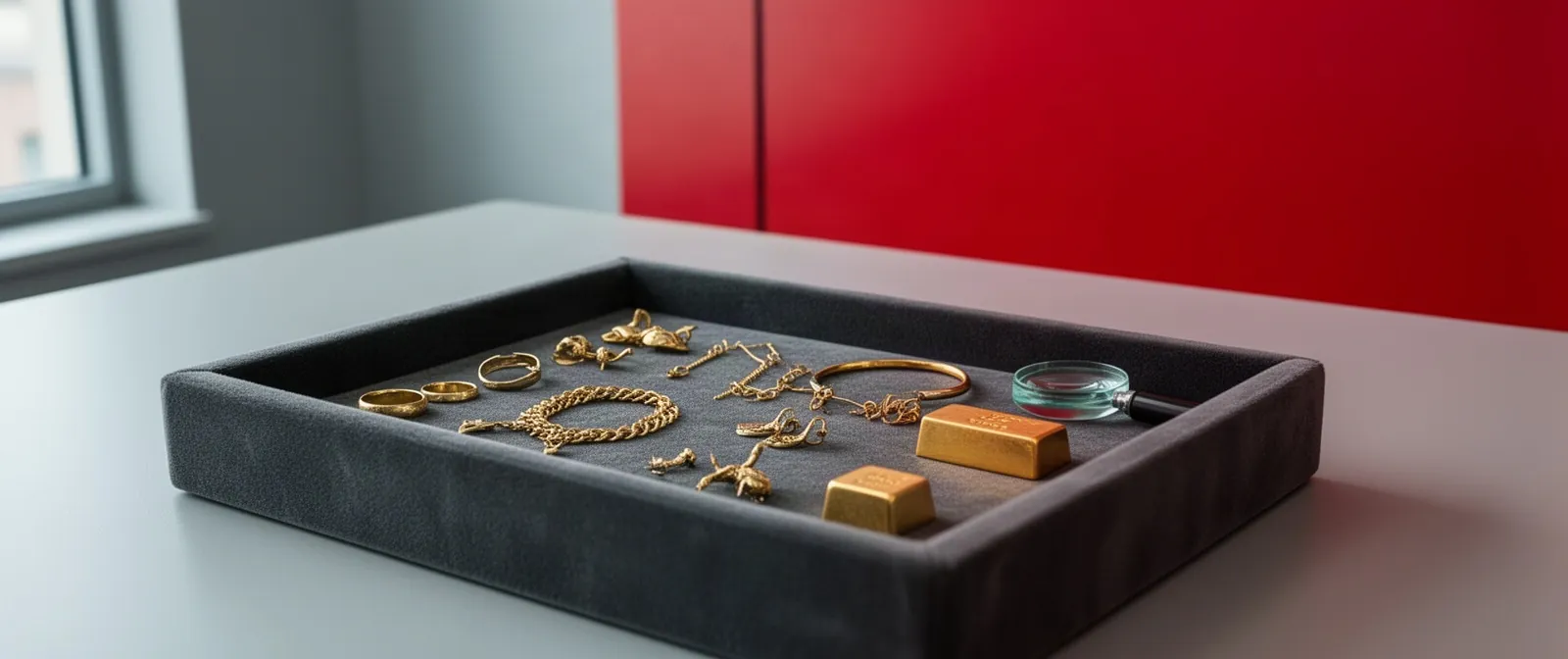
A wedding ring is usually a smooth band with no inserts, and it's the easiest to appraise: only the metal weight and purity matter. Engagement rings usually have a raised setting with a stone, while men's signet rings have a wide cast band, sometimes with engraving or an overlay. For a collateral loan, the design barely matters — what matters is the net weight of gold.
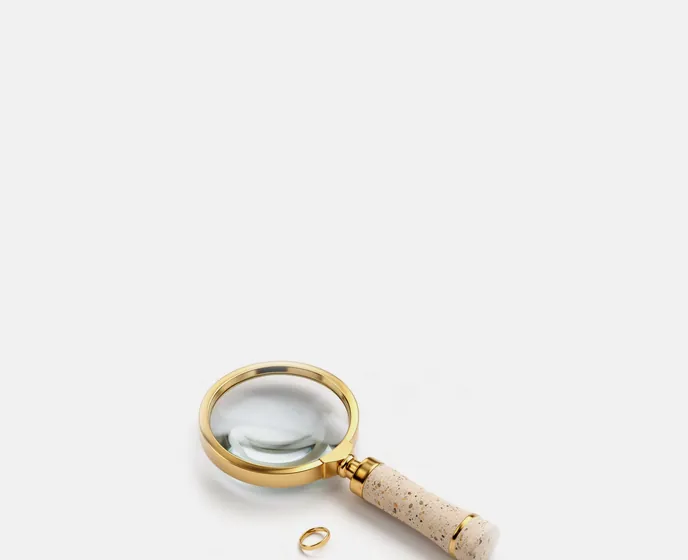
Ring purities in Kazakhstan and the region are 375, 583, 585, 750 and, less often, 999. The hallmark is usually on the inside of the band, and the maker's mark may be next to it. If the hallmark is worn off from use, we check the composition with an analyzer: it shows the share of gold in the alloy without acid and without scratching the item.
A separate note on coated rings — rhodium plating, enamel, blackening. The coating is not a precious metal and doesn't count, but it doesn't hinder the appraisal either: we weigh the item and subtract the mass of whatever isn't gold, if that can be determined. In doubtful cases, we go by the actual weight and the analyzer's result.
Size and weight: why size doesn't affect the amount
Ring size is the inner diameter, and it has nothing to do with the amount of metal. Two rings of the same design, size 16 and size 20, will differ in weight only slightly: the difference goes into the length of the band, not its thickness. That's why in appraisal we always start from the actual mass on the scales, not the size.
Ring weight depends on the width and thickness of the band, whether it is hollow inside, and the density of the alloy. A thin wedding band 2–3 mm wide usually weighs 2–4 grams, while a wide ring or signet weighs 5 grams and up. Hollow rings, made for visual volume with minimal metal, weigh noticeably less than they appear.
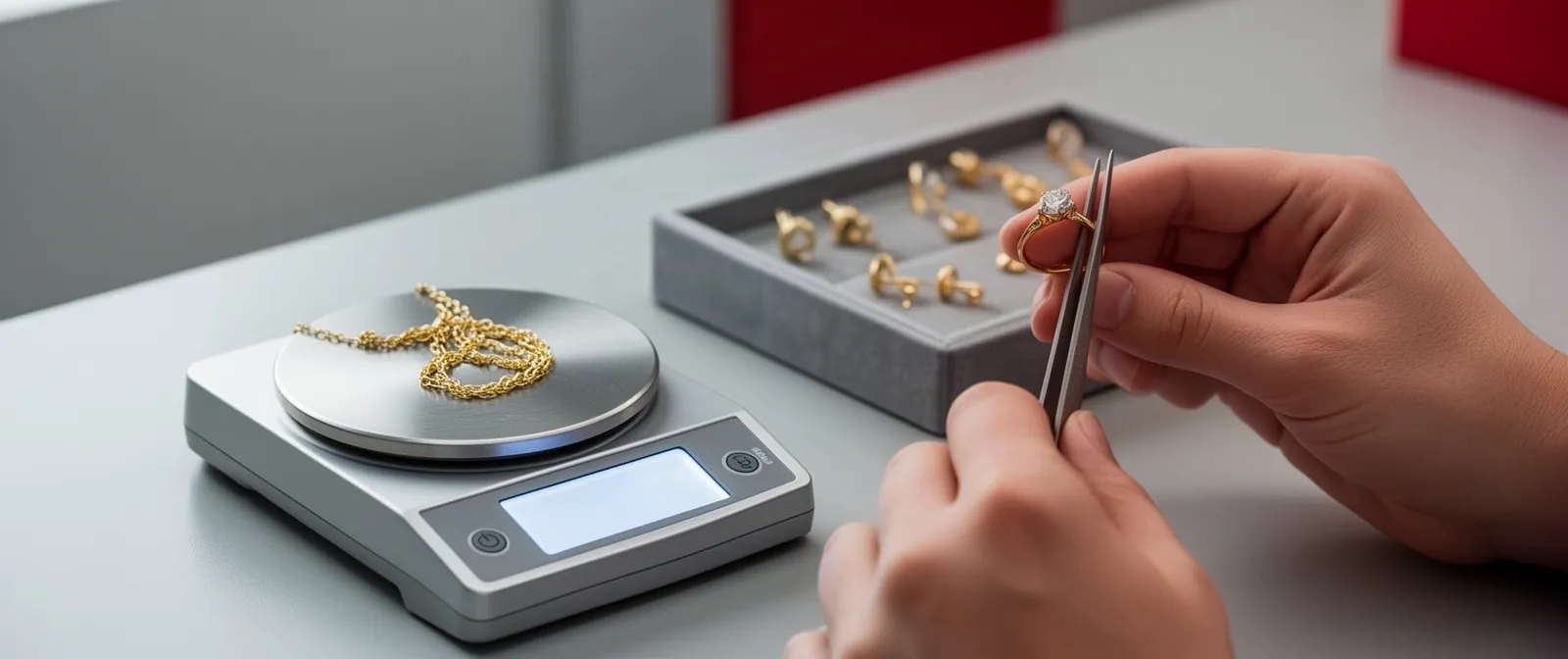
We weigh the ring on certified scales in front of you and quote the amount right away, based on the price per gram for your purity. The price per gram is shown on the page and depends only on purity, not on whether it is a wedding band, a signet, or an engagement ring. If the ring is part of a pair, you can pawn both or just one — a matching set is not required.
Stones and inlays: what is deducted and why
Ring inlays vary: cubic zirconia, zirconium, glass, semi-precious or precious stones, sometimes just enamel. Precious metals count by weight, but stones do not, because we accept gold, not finished jewelry. That is why the weight of the inlay is deducted from the total weight of the ring, and the loan is calculated on the net weight of gold.
The weight of a stone cannot be judged by eye, so we rely on typical values for common inlay sizes and on the setting design. If the stone is large and can be carefully removed without damaging the piece, we can weigh the ring before and after — then the deduction is exact. If the stone is set permanently or the setting is complex, a standard deduction by inlay type and size applies.
A missing stone is not a problem. A ring with an empty setting, a crack in the band, or a broken ring is accepted just like an intact one: we appraise the metal, not the condition of the jewelry. The only things that can affect the appraisal are heavy soiling or non-precious overlays that distort the weight. We discuss such details with you before finalizing.
Engraving, deformation, and broken rings
Engraving is a text or pattern cut into the metal. It neither adds nor removes any significant amount of gold: engraving takes off a fraction of a gram, which does not show on the scales. So a date, names, or a commemorative inscription inside the band do not affect the appraisal — the ring is valued by total weight and purity.
A deformed ring — flattened, bent, or with distorted geometry — is accepted without question. We do not restore shape; what matters to us is the metal. The same goes for broken rings: if the band has split at the seam or cracked, the piece is still gold and is appraised by weight. A crack does not reduce the amount of metal.
The only nuance is if the ring was soldered from several parts or contains solder. Solder usually has less gold than the main alloy, and this is taken into account during melting. In practice, for standard rings this factor is small, but if the piece is clearly composite, we test it with an analyzer at several points so the appraisal is accurate.
How the loan works and what you can do with the ring
The loan works like this: you bring the ring to any of our 24/7 branches in Almaty, we weigh it, check the purity with an analyzer, and quote the amount. Appraisal and paperwork are 0 ₸, and we pay out in cash or to a Kaspi card. The loan is up to 80% of market value, the rate is 0.19–0.25% per day, the term is 1 to 90 days, and early buyout has no penalty.
If you do not plan to buy the ring back, you can sell it right away — in that case the amount is about 10% higher than the loan amount. Pledged items are kept in a safe, and only staff have access to them. The ring remains yours until the end of the loan term, and you can buy it back at any time.
If you cannot come in, send a photo of the ring via WhatsApp — we will give a preliminary appraisal from the picture. The final amount will still be quoted after weighing and a purity check, because weight and composition cannot be determined accurately from a photo. A ring with a stone, without a stone, a wedding band, or a signet — bring it in, we will sort it out on the spot.