











What 750 purity is and why it contains more gold
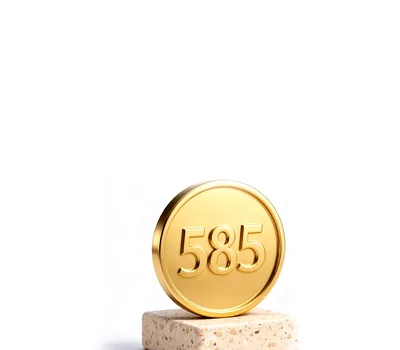
Purity 750 is a mark that indicates the content of precious metal in the alloy. The number 750 means 750 parts of gold out of 1000, that is, 75% pure gold and 25% additives. For comparison: 585 purity contains 58.5% gold, and 375 — only 37.5%. That's why a gram of 750 purity costs noticeably more: when converted to pure gold, you get more metal.
The alloying metals, that is, additives, can vary. Most often it's copper, silver, palladium, or nickel. Their ratio determines the color of the alloy: yellow, white, or rose. For example, to get white gold, palladium or nickel is added to the alloy, and for a rose shade, the copper content is increased. The purity remains 750 — only the color changes, not the gold content.
Due to the high purity, the metal is softer than 585, so items require careful wear. However, this doesn't mean they aren't durable: modern alloys with palladium or rhodium plating are quite resistant to deformation. It's important to understand that 750 purity is not only jewelry, but also the cases of expensive watches, as well as some jewelry pieces with diamonds.
Italian and Arabic jewelry: hallmarks and features
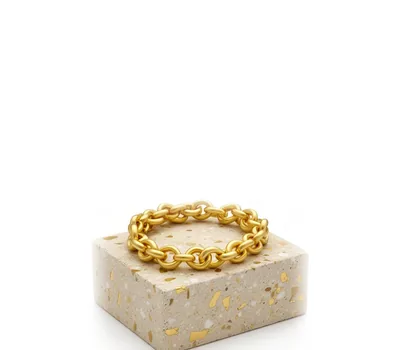
Italian jewelry is often marked with the "18K" or "750" hallmark. These are the same thing: 18 karats corresponds to 750 purity. Italian jewelers are known for the quality of their chain, bracelet, and other item weaving. Their products usually bear the hallmark of the assay office of the country of origin and may also include the maker's mark. During appraisal, we check for the hallmark and whether the alloy matches the stated purity.
Arabic jewelry is also often made in 750 purity, especially in the Persian Gulf countries. They may have hallmarks in Arabic or in the form of numbers. For example, "750" or "18K". Sometimes items without a hallmark are found, but with a characteristic appearance. In such cases, we perform an additional check with an analyzer to accurately determine the alloy composition.
It's worth noting that Italian and Arabic items may be more expensive not only because of the purity, but also because of the complexity of manufacturing. For example, machine-woven chains or handcrafted work increase the cost. However, for collateral or buyout, we focus primarily on weight and purity, not the country of origin. Nevertheless, quality jewelry from well-known brands may have additional value.
White gold and rhodium plating: what you need to know
White gold 750 purity is an alloy in which the yellow metal is lightened with palladium, nickel, or silver additives. To give the piece a bright white shine, it is often coated with a layer of rhodium. Rhodium is a platinum-group metal that resists corrosion and gives the jewelry a mirror-like look. However, over time the coating can wear off, especially on areas that come into contact with the skin.
When appraising items with rhodium plating, we take into account that underneath is 750 purity gold. Rhodium wear does not affect the purity and weight of the gold, but it can affect the appearance. If you plan to pawn or sell such jewelry, we will still appraise it by its gold content. Rhodium plating is not a precious metal in the sense that we do not factor it into the valuation.
Some white gold items may not have rhodium plating if the alloy itself is white enough. For example, with a high palladium content. In any case, purity and weight matter for the appraisal. If you are unsure whether there is a coating, we can test the item with an analyzer that shows the alloy composition without damaging the surface.
Inserts: how stone weight is deducted
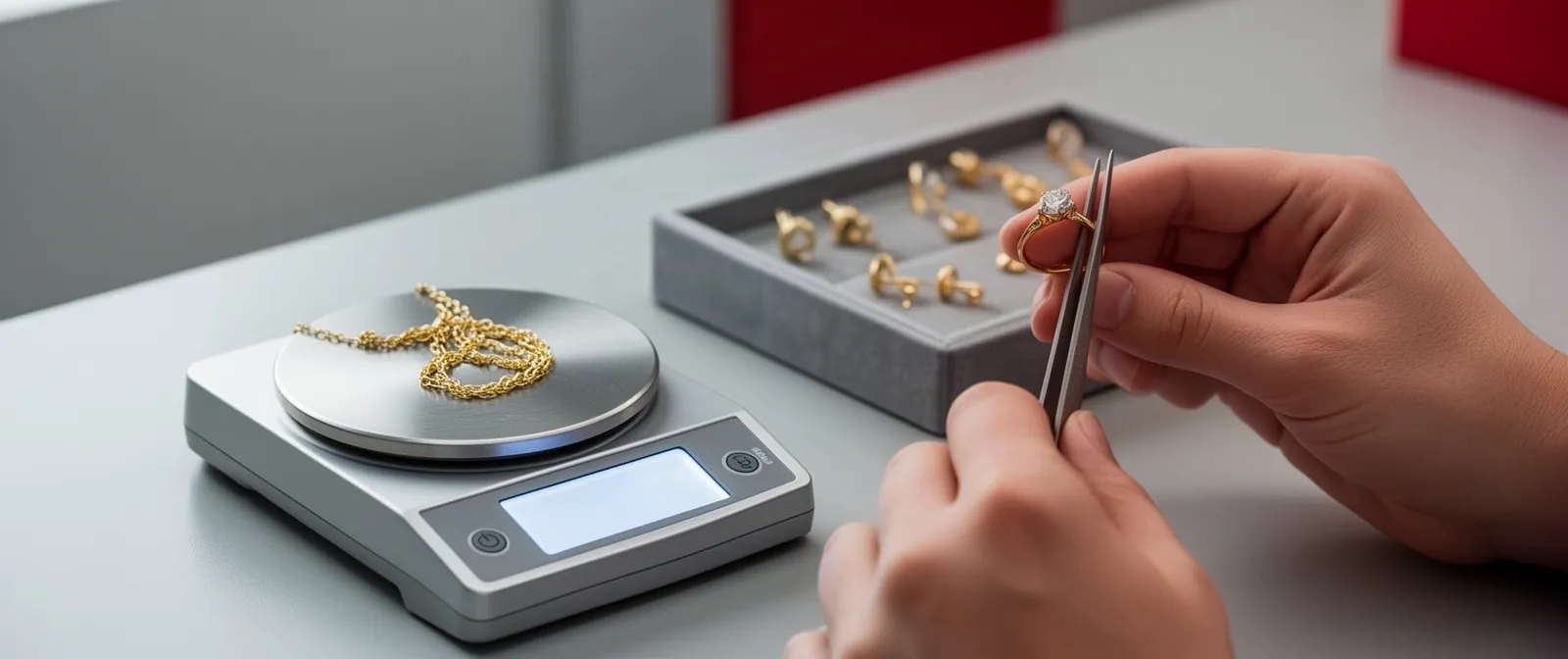
750 purity jewelry is often set with inserts: diamonds, sapphires, rubies, emeralds, or cubic zirconia. During appraisal, we determine the gold weight without the stones. To do this, the item is weighed and then the weight of the inserts is deducted. If the stones are set flush, it is hard to determine their weight precisely, so we use average coefficients or run additional diagnostics.
For transparent stones such as diamonds or cubic zirconia, weight can be estimated by size and density. However, if the stones are small and numerous, the margin of error may be higher. In such cases, we rely on the total weight of the item and a visual assessment. It is important to understand that we do not pay for the stones: you receive money only for the gold. This is standard practice for pawnshops, as we do not deal in selling jewelry inserts.
If you want to pawn or sell an item with stones, we recommend checking in advance how the deduction will be calculated. At our branches, the appraisal is done in front of the client: you see how the item is weighed and how the stone weight is deducted. This helps avoid misunderstandings. In some cases, if the stones are valuable, we can offer to appraise them separately, but that is already beyond a standard gold collateral loan.
Why a gram of 750 purity is more expensive than 585
The price per gram of 750 purity gold directly depends on the content of pure metal. 750 purity gold is 75% gold, while 585 is 58.5%. The difference is 16.5 percentage points. Converted to pure metal, one gram of 750 purity contains 0.75 g of gold, while 585 contains 0.585 g. That is why the price per gram of 750 purity is higher. Our website shows the price: 41 200 ₸ per gram for a loan and about 45 320 ₸ for buyout. That is a third more than for 585 purity.
Besides, 750 purity items often have a more complex design and a better appearance. However, during appraisal we base our valuation on the market price of pure gold, not on artistic value. That is why the price per gram is determined primarily by purity and the current rate. We do not give discounts for the jewelry being Italian or Arabic, unless we are talking about branded items with added value.
If you compare 750 purity with 585, keep in mind that the price difference can be significant. For example, for a collateral loan, 750 purity gives 41 200 ₸ per gram, while 585 gives 32 100 ₸. This means that for the same item by weight, you will get more money if it is made of 750 purity. For buyout, the difference remains: 45 320 ₸ versus 35 310 ₸. So before you pawn or sell a piece of jewelry, it is worth checking its purity.