













What is 999 purity and how does it differ from jewelry gold
999 purity means the alloy contains 99.9% gold. The remaining 0.1% is acceptable impurities unavoidable during refining. This metal is called pure: it is soft, malleable and contains no copper, silver or palladium, which are added to jewelry alloys for strength.
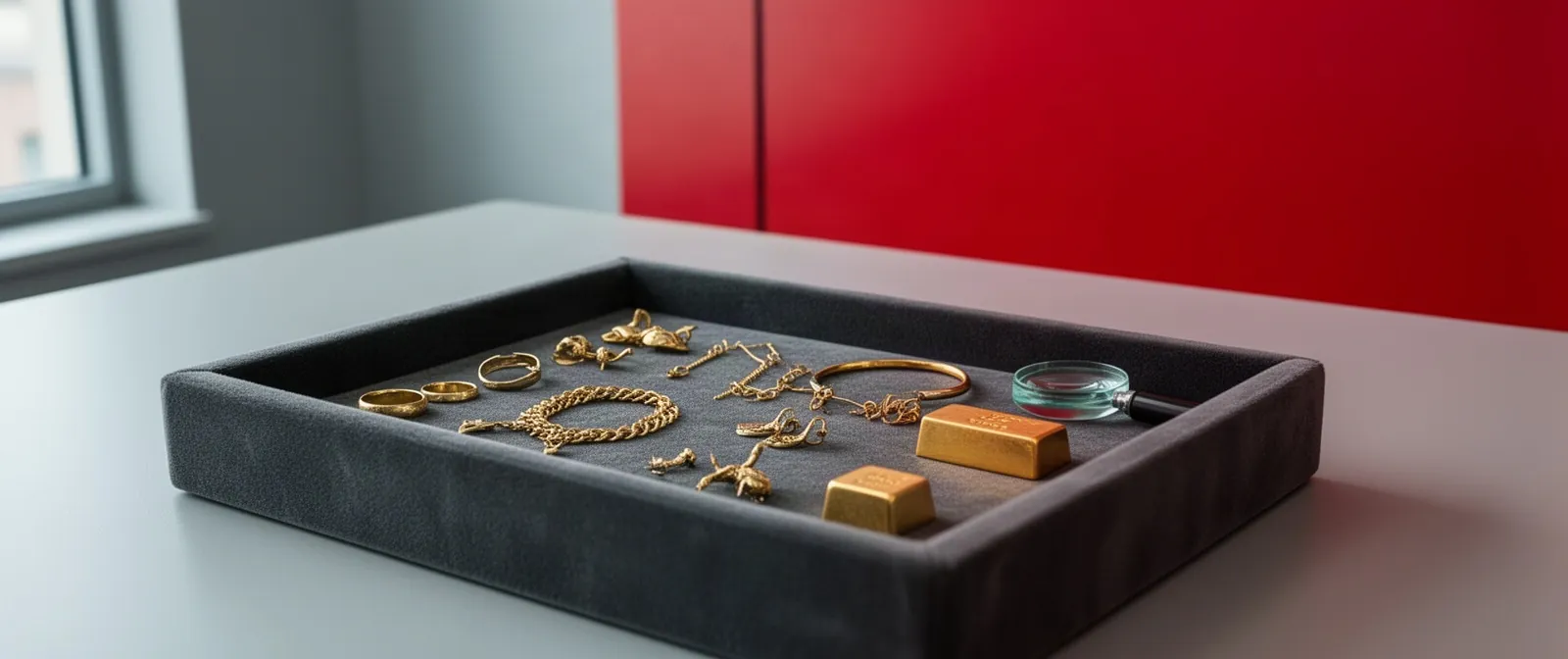
Jewelry is most often made from 585 or 750 purity: gold is combined with other metals so a ring or chain holds its shape and resists scratches. Items of 999 purity rarely appear in a jewelry display — these are one-off hand-forged pieces where the softness of the metal is part of the design, not a flaw.
For investment and savings, 999 purity is convenient because it is easy to convert into pure gold. If a 585 purity piece is just over half pure metal, a 999 purity bar is almost entirely pure by weight. That is why the price per gram here is the highest of all purities.
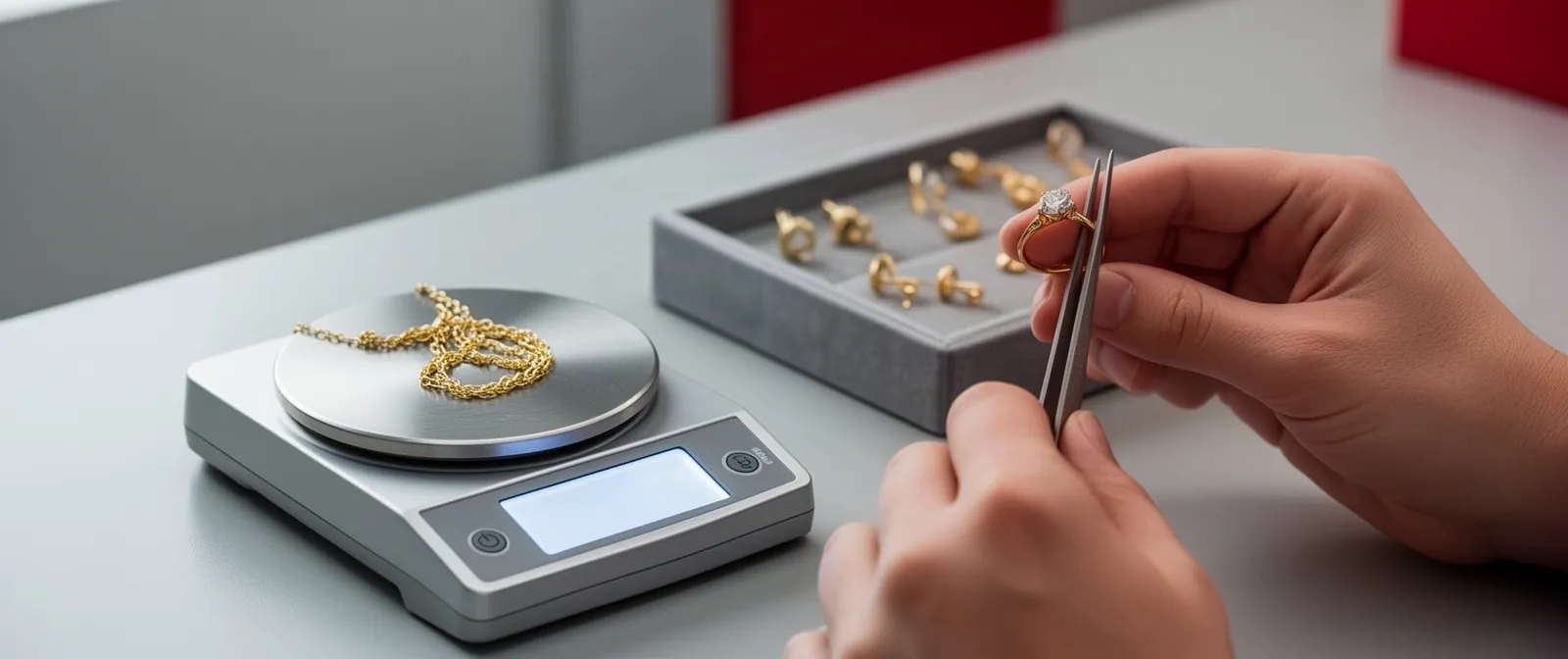
Purity cannot be determined by eye: visually, pure gold resembles certain alloys. At a pawnshop, purity is confirmed with an analyzer — a device that reads the surface composition without acid, a file or scratches. The item stays exactly as it was brought in.
Measured bars: weight, stamp, certificate
A measured bar is a standard gold ingot of 999 purity marked with the manufacturer, weight and purity. Common weights: 1, 5, 10, 20, 50, 100, 250, 500 and 1000 grams. Each bar has a unique number stamped into the metal along with the mint's mark.
The bar comes with a certificate — a document listing the same details: number, weight, purity, name of the refinery. The certificate confirms the metal's origin and makes verification easier on resale. If the certificate is lost, the bar itself remains genuine, but confirming its specifications is harder.
Factory packaging is a sealed plastic blister in which the bar is mounted on a cardboard base with the manufacturer's logo. Opening the packaging does not make the metal worse, but a sealed blister sells for more: it shows the bar was not re-melted or re-weighed.
When appraising a bar, the stamp, number, weight and purity match are checked. The analyzer confirms the composition, and scales confirm the actual mass. If the bar is in a blister, it can be checked without opening the packaging, so its integrity is preserved.
999 purity investment coins
Investment coins are minted from 999 or 999.9 purity gold. Unlike collectible coins, they have no limited mintage or elaborate design — they are produced in bulk for investment. Weight usually corresponds to a troy ounce (31.1 g) or fractions: 1/2, 1/4, 1/10 ounce.
Well-known series: Australian Kangaroo, Canadian Maple Leaf, American Gold Eagle (916 purity, though pure versions exist), Chinese Panda, Vienna Philharmonic. Each coin has a face value set by the manufacturer, but its real value is determined by weight and the current gold price.
Coins are convenient because they are easy to verify: diameter, thickness and weight are strictly standardized. Counterfeits are detected by mismatched dimensions, magnetic properties and density. At a pawnshop, a coin is checked with an analyzer and weighed on precision scales.
The price per gram in a coin is close to the bar price but may differ slightly due to minting and condition. Coins with scuffs, signs of circulation or an opened blister are accepted just like pristine ones — the metal matters, not collectible condition.
Why a gram of 999 purity is the most expensive
The price per gram of gold depends on how much pure metal an item contains. In 999 purity it is almost 100%, so when converted to pure weight, such a gram costs more than a gram of 585 or 750 purity. A pawnshop pays for the pure metal, not for the craftsmanship.
The second factor is ease of processing. A bar or coin of 999 purity does not need to be cleaned of alloying additives: the metal is already suitable for refining or resale. This lowers costs, and part of the savings returns to the client as a higher rate per gram.
The third factor is liquidity. Measured bars and investment coins are standardized, making them easy to accept and resell. Items of 999 purity are rarer, but if the item is verified, the price per gram stays at the level of bars.
Ultimately, the price difference between purities is explained not by the "quality" of the gold but by the share of pure metal and the convenience of its further use. The higher the purity, the more expensive the gram — this is a general rule for all items.
Pledging a bar vs pledging jewelry: what's the difference
When pledging a bar or coin, appraisal takes less time: there's no need to determine the purity of every link — it's enough to check the hallmark, weight and composition with an analyzer. Jewelry of 999 purity may take longer to inspect — for example, if it's a forged chain or a bracelet with soldered elements.
The loan amount depends on weight and the current price per gram. For bars and coins it's predictable: you know the weight and purity in advance. For jewelry, the weight may include clasps, ear wires or inserts that aren't gold, so the net weight of the metal is determined separately.
Storage is also slightly different. Bars and coins take up less space and have no protruding parts, so they're easier to place in a safe. Jewelry is stored in individual packaging to avoid deforming the soft 999 metal.
With early buyout there's no difference: you repay the loan amount and interest for the actual number of days, with no penalties for early repayment. No appraisal or processing fees are charged — this applies to both bars and jewelry.