


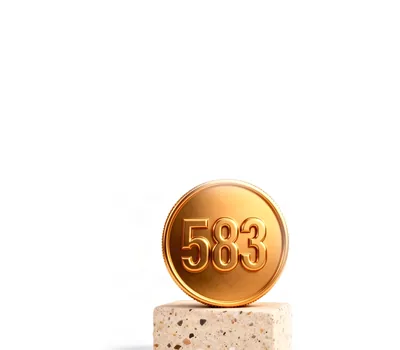
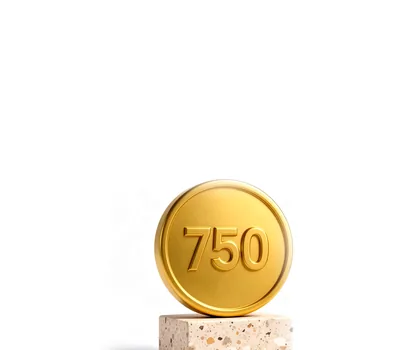
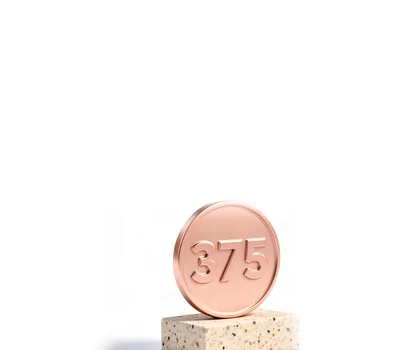
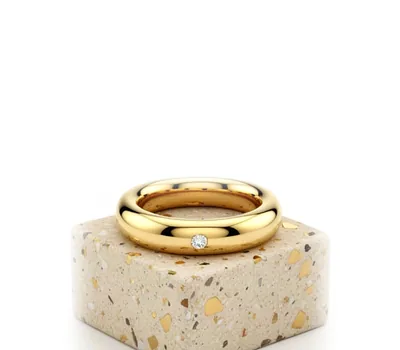






Composition of the 585 alloy
585 gold is 58.5% gold, the rest is alloy: copper, silver, palladium, nickel or zinc. These metals give the item hardness and wear resistance that pure gold lacks. Without alloy, gold is too soft: a ring would quickly lose its shape and a chain would break. That's why 585 is a compromise between noble shine and practicality.
The ratio of additives affects the color and slightly the density. The more copper, the redder the shade; silver and palladium give a cool white tone. Palladium is more expensive than silver, so white gold with palladium is valued higher. At the pawnshop, appraisal looks first at gold content, not color, but the alloy composition can affect density and therefore the weight of the item.
585 alloy melts at about 900–1000 °C depending on composition. This matters for jewelers, but not for acceptance: we test the purity with a tester that determines the gold share in the surface layer. If the item is coated with rhodium or enamel, the tester will still show the gold content in the base.
Colors: yellow, red, white with rhodium
585 yellow gold is a classic: the alloy has roughly equal parts silver and copper. It needs no coating and only tarnishes over time, but polishes easily. Red gold contains more copper, so the shade is warmer and richer. White gold is made by adding palladium or nickel; to enhance the whiteness, the item is coated with rhodium — a thin layer of platinum metal.
Rhodium plating is not part of the alloy: it's a galvanic layer microns thick. Over time it wears off, and the item may show a yellowish or grayish base tone. We account for this in appraisal: the tester shows the gold content in the alloy, not in the coating. If you bring white gold with rhodium, the price is calculated by weight and alloy purity, with no premium for the coating.
585 red gold is often found in Soviet and post-Soviet jewelry, but modern makers use it too. Yellow and white — in new collections. Color does not affect the buyout price if the purity is confirmed. The only exception is if the item is coated with a thick layer of another metal or enamel — then we may offer appraisal by the base.
Why 585 is the most common metal
585 purity is widespread because it suits mass jewelry production: the alloy is workable, casts well, holds its shape and isn't too expensive. Rings, chains, earrings, bracelets, pendants are made from it. In Kazakhstan and CIS countries it's the main purity for everyday jewelry. That's why 585 is what people most often bring to pawnshops.
For the borrower this is a plus: 585 items are liquid, easy to appraise and accept. For the buyer — an affordable price compared to 750 or 999 purity. At the same time, 585 doesn't tarnish as fast as 375 and isn't as soft as 999. It's the golden mean in wear resistance and cost.
We accept both scrap and finished items. If a piece has stones, the appraisal may change: we value precious stone settings separately, but only if they have documentary proof or clear value. Ordinary cubic zirconia and rhinestones don't increase the amount.
Scrap and items with stones: how we appraise
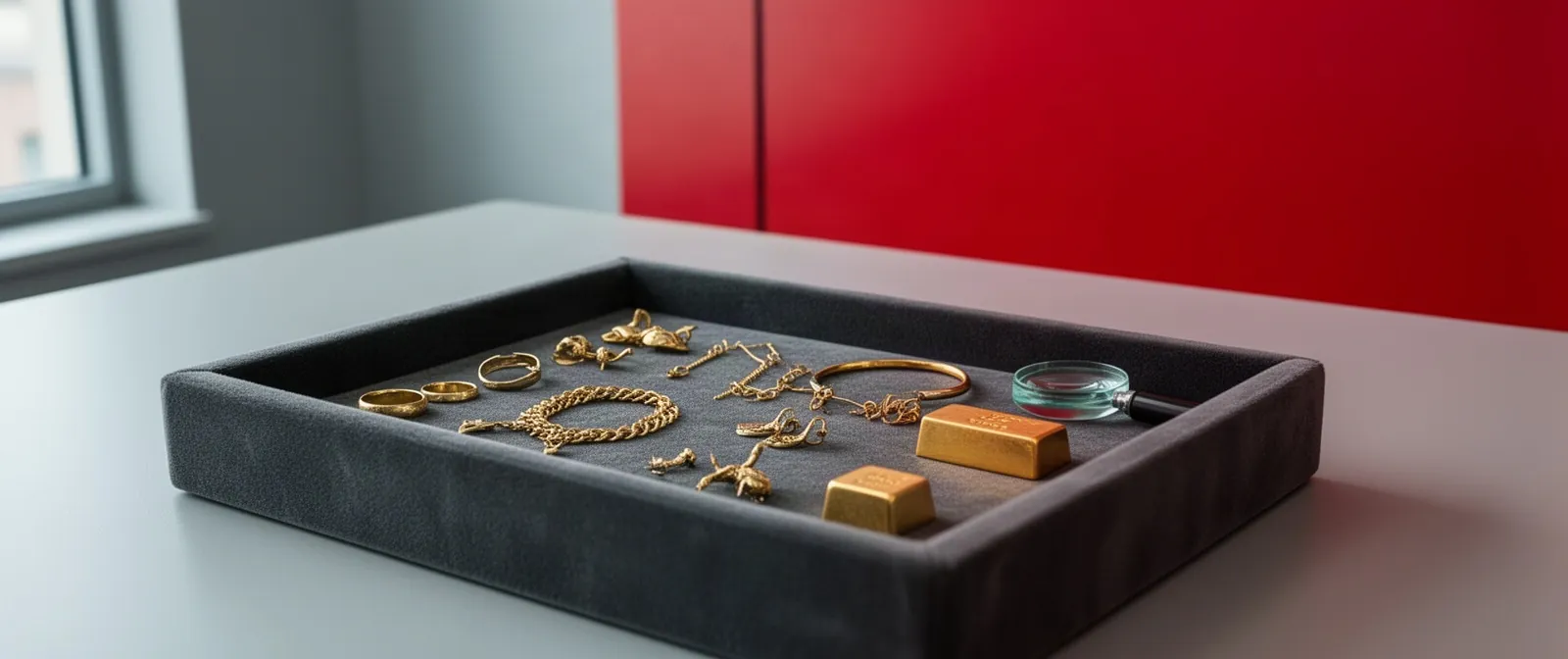
585 scrap is broken or worn jewelry without stones. We accept it by weight and purity. If an item has stones, we first appraise the metal, then the settings. Precious stones (diamonds, emeralds, rubies, sapphires) can add to the value, but only after verification. Ordinary glass or cubic zirconia settings are not counted.
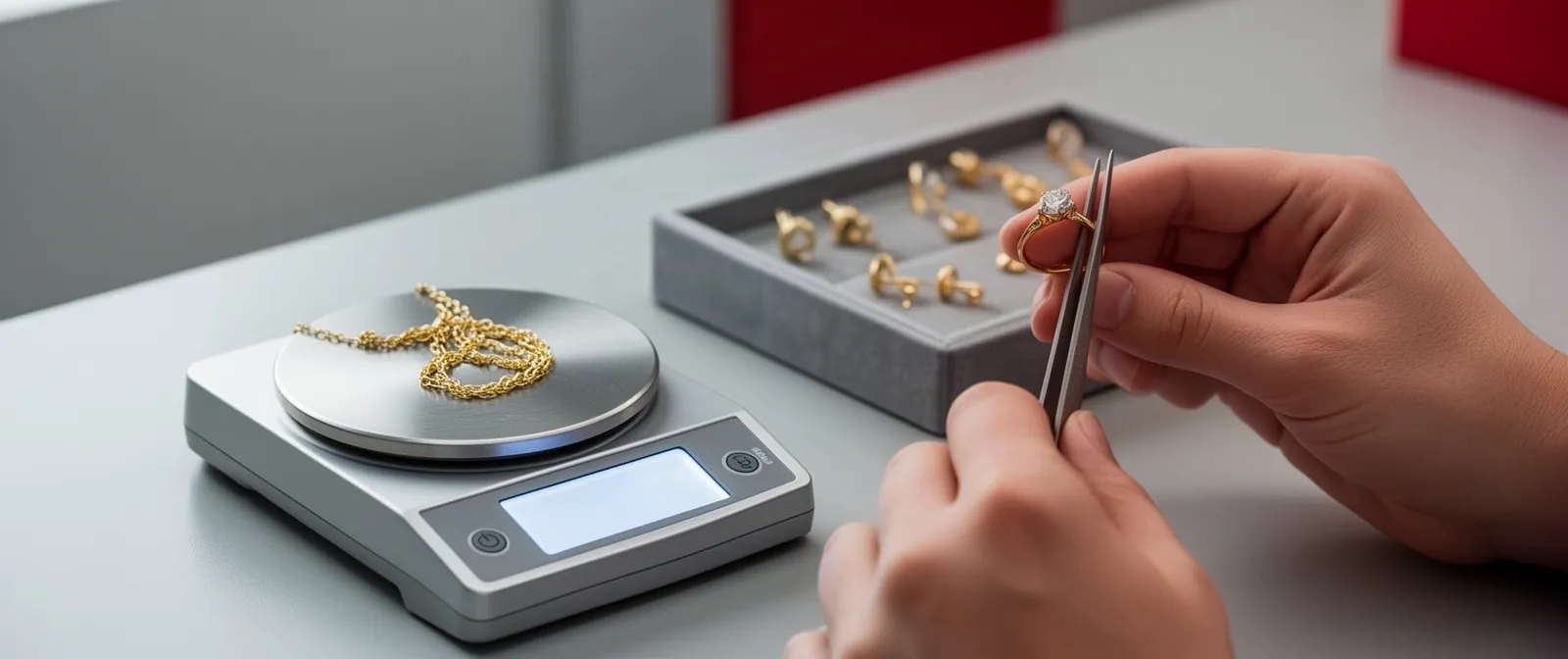
For appraisal we use a tester: it shows the gold content without damaging the item. We don't use acid or scratches. If you're unsure about the purity, bring the item to a branch — appraisal is free. You can first send a photo via WhatsApp, and we'll give you a price estimate.
Important: if an item has historical or artistic value, the pawnshop appraisal may be below market. In such cases it's better to consult an antique dealer or appraiser. We work with ordinary jewelry and scrap, where the price is set by weight and purity.
How to read the 585 hallmark
A hallmark is a state assay mark that confirms the gold purity. In Kazakhstan and Russia, it is shaped like a spatula or rectangle with the numbers "585" and a girl's head in a kokoshnik (for the Russian hallmark). The Kazakh hallmark may look different, but the numbers are the same. The hallmark is stamped on the inside of a ring, on an earring clasp, or on a chain link.
If there is no hallmark, it doesn't mean the gold isn't 585 purity. The hallmark could have been cut off or worn away. In that case, we test it with an analyzer. Sometimes the hallmark is counterfeit: the numbers look uneven, the font is non-standard. But the analyzer will still show the real gold content. That's why we don't rely on the hallmark alone.
Reading a hallmark is simple: look for the numbers "585" or "583". If it says "583", that's an old Soviet purity, which is almost identical in gold content. We accept both 583 and 585. If the hallmark is illegible, the specialist will determine the purity with a device. The main thing is that the item isn't coated with a thick layer of another metal, otherwise the surface analysis may be inaccurate.