






What alloys are used in dentistry
Gold is not used in pure form in dental prosthetics, but as part of alloys. Pure metal is too soft: a crown made of it would quickly wear down and deform under chewing loads. That is why other metals are added to the composition to give the item hardness and wear resistance.
The base of such alloys is gold, and the additives are most often palladium, platinum, silver, copper, zinc or indium. Palladium and platinum increase strength and melting point, copper improves casting properties, and silver affects color and ductility. The ratio of additives determines the alloy grade and its purity.
Under the Russian and Kazakh assay systems, dental alloys usually correspond to 750 or 900 purity, with higher values up to 916 also found. This means the share of gold in the item is 75% or more. For comparison: jewelry most often uses 585 purity, that is, 58.5% gold.
Because of the high share of precious metal, a gram of dental gold costs more than a gram of jewelry of the same weight. In our appraisal we focus on purity and weight, not on the shape of the item or its original purpose.
Impurities, ceramics and other metals in the item
A dental crown is rarely made of gold alloy alone. Often ceramics or composite are applied over the metal — this is needed so the item looks like a natural tooth. Such a coating is not gold and is not counted in the appraisal.
Besides ceramics, the structure may contain other metals: for example, a base metal framework under the facing or solder at the joints. Solder usually contains less gold than the main alloy, and we take this into account. If an item consists of different parts, we appraise them separately by their actual metal content.
Sometimes an item has inclusions or voids — for example, if the crown is hollow inside. Such details affect the weight, so we always weigh the metal part itself, not the whole item. Voids and non-gold elements are not paid for.
If you are not sure what is inside the crown, that is not a problem: we will take the item apart and determine the composition as it is. For the appraisal you do not need to remove the ceramics yourself in advance — this can be done on site, and we will show you the result.
How we clean and weigh dental gold
Before weighing, the item must be freed from non-gold parts. If the crown has a ceramic facing, we carefully remove it to get pure metal. This is done in your presence, and you see how much remains after the coating is removed.
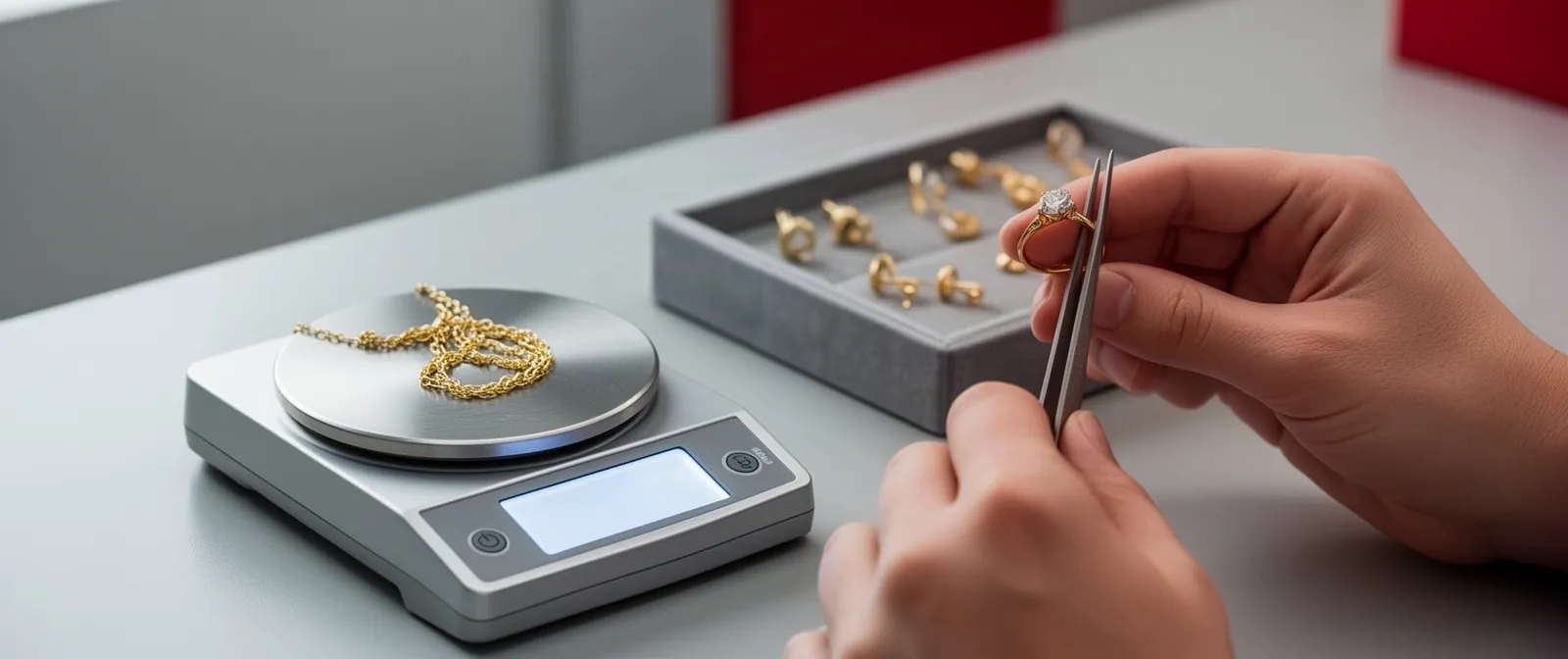
After cleaning, the item is weighed on a precision scale. The weight is recorded in grams, and the final amount depends on it. We do not round the weight in our favor and show the result on the scale display.
We determine purity with an analyzer — a device that works without acid and without scratches on the metal. This matters because the acid method leaves marks, and the mechanical one can damage the item. The analyzer gives accurate data on the gold content in the alloy.
If an item consists of several parts with different purity, we test each one separately. Then we calculate the total weight for each purity and add up the value. This approach rules out situations where more expensive metal is appraised at the price of cheaper metal.
Why the amount is calculated on pure metal
Dental gold is accepted as scrap, not as a finished item. This means we pay only for the metal — its weight and purity. The cost of dental work, the shape of the crown, the complexity of the prosthesis are not included, because after melting these characteristics do not matter.
Ceramics, composite, solder and other non-gold elements are not paid for. If they are not removed, the weight of the item will be higher, but the price per gram will be lower, because the impurities are not gold. That is why we always clean the item before the final weighing.
The price per gram depends on purity. For 750 purity we indicate 41 200 ₸ per gram for a collateral loan and about 45 320 ₸ for buyout. For higher purity, such as 900 or 916, the price is calculated individually — it will be higher, since the share of gold in the alloy is greater.
The final amount is the weight of pure metal multiplied by the price per gram of the corresponding purity. We make no additional deductions for cleaning or appraisal: these services are free. You receive money in cash or to a card right after the amount is agreed.
What is important to know before handing in a crown or bridge
Dental gold can not only be pawned but also sold outright. When selling, the amount is about 10% more than you'd get as a collateral loan. If you don't plan to buy the item back, buyout is the better choice.
Before your visit, you can send a photo of the item via WhatsApp for a preliminary appraisal. This helps you gauge the approximate amount, but the final figure is still determined after weighing and purity testing. A photo doesn't replace instrument-based appraisal.
If you're unsure about the purity, don't try to determine it yourself with acid or other methods. This can damage the metal and complicate the appraisal. We'll test the composition with an analyzer and show you the result.
Pawned items are stored in a safe, and buyback is possible at any time without penalty. If the loan amount doesn't suit you, you can walk away from the deal — appraisal and paperwork are free, and this creates no obligations.