


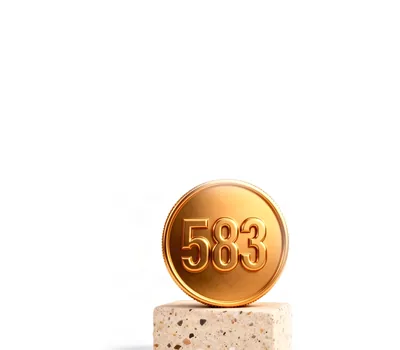
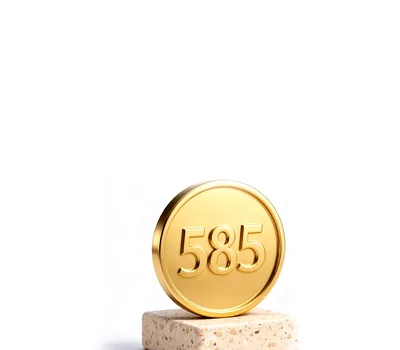
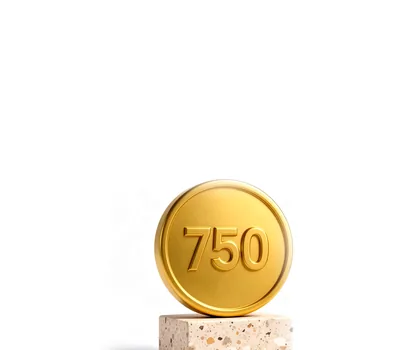
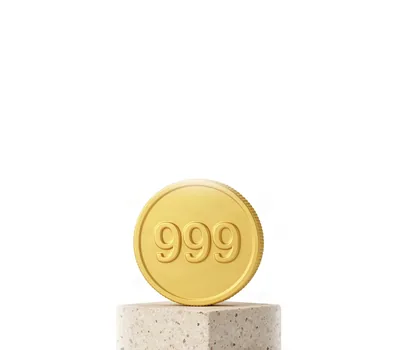






What is 375 purity and why is it reddish
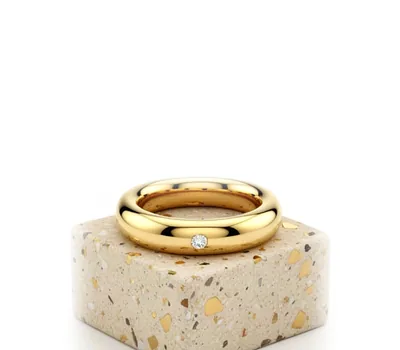
375 purity means the share of gold in the alloy: 37.5% by weight, the other 62.5% is base metals. These usually include copper, silver, sometimes palladium or zinc. It's the base metals that set the color and mechanical properties: the less gold, the stronger the tint of the additives. With high copper content the alloy looks reddish, with silver or palladium added it's paler, sometimes with a grayish sheen. That's why 375 jewelry is rarely bright yellow like 585 or 750.
Under Russian and Kazakh standards the purity is stamped as 375, in some countries you'll see 9K. It's the same thing: 9 karats out of 24 equals 37.5%. Jewelry with this stamp is often made large and embossed — the alloy is cheaper, so it pays for the maker to go for massive shapes. The color can vary: from pink-red to pale yellow, depending on the alloy recipe.
375 purity is softer than 585: copper and silver together make the alloy less hard. That means rings and bracelets lose their shape faster, showing scuffs and dents. But this metal is easier to solder and polish, so it's often used in budget mass-market jewelry.
Why 375 gold oxidizes and tarnishes
Gold itself doesn't oxidize in air, but the base metals do. Copper, most common in 375 gold, reacts with moisture, sweat and sulfur compounds. As a result, a dark or greenish film appears on the surface. This isn't a defect or a sign of a fake, but a natural process for an alloy high in copper. How fast it tarnishes depends on skin acidity and contact with cosmetics and household chemicals.
If your item has tarnished, that doesn't mean it isn't gold. Tarnishing can be removed with gentle polishing or ultrasonic cleaning, but you can't fully prevent it from coming back. To slow the process, makers sometimes add palladium to the alloy or rhodium-plate the surface. Rhodium plating gives a lighter shade and protects from moisture, but wears off over time.
During appraisal we look not only at color, but also at the stamp and alloy composition. If the jewelry has tarnished, that doesn't reduce its weight or prevent us from accepting it. Gold in the alloy is still gold, and its share is confirmed by the purity stamp.
Where 375 purity is found: budget jewelry and imports
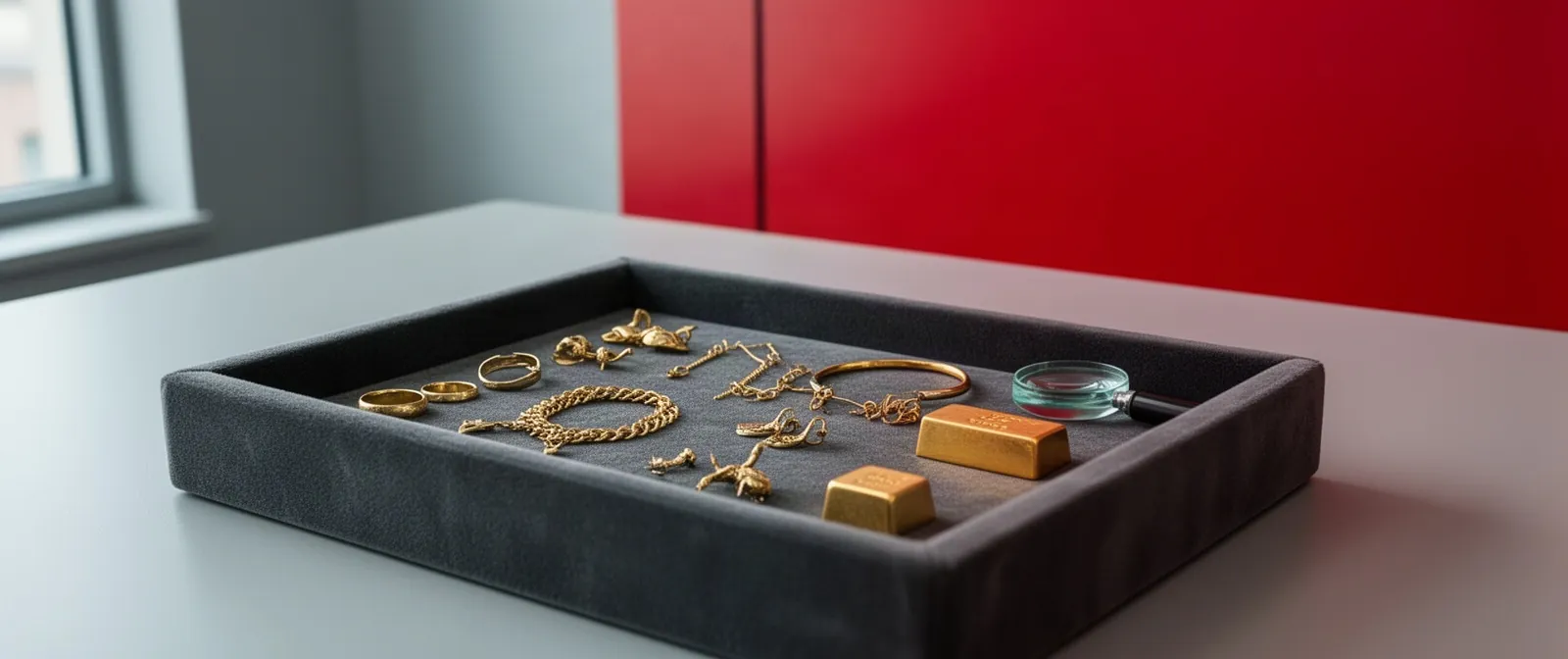
375 gold is common in budget mass-market jewelry. In Turkey, Italy, Germany and parts of Eastern Europe it's used for chains, bracelets, earrings and rings sold in the low price range. Such pieces often have no expensive stones, and the design is made for everyday wear. These items reach Kazakhstan through imports, so the hallmark may be foreign.
375 gold also shows up in vintage pieces: in Soviet times 375 existed, but 583 was used en masse. Today in Almaty you can find items marked 9K, 375, or with no hallmark at all but with a manufacturer's tag. A missing hallmark doesn't always mean a fake — sometimes it's applied only by the factory, not the assay office. In disputed cases we test the composition with an analyzer.
Buyers often confuse 375 gold with gold-plated items. The difference is fundamental: plating is a thin layer of gold on base metal, while 375 is an alloy with gold throughout its volume. This matters for appraisal, because plating isn't accepted as gold, while 375 is accepted at the price per gram.
How to tell 375 from 585 and what it means for the amount
The main difference is the gold content: 375 has 37.5%, 585 has 58.5%. Hence the price gap: in today's price list 375 is 20 600 ₸/g for a loan and about 22 660 ₸/g for buyout, while 585 is 32 100 ₸/g and about 35 310 ₸/g respectively. The price per gram is based on the pure gold content, so 375 is cheaper roughly in proportion to the metal share.
You can't determine purity visually: color and shine depend on the alloy, not just the gold share. The most reliable way is to check the hallmark and composition. At the pawnshop we use an analyzer that shows the gold percentage in the alloy without acid or scratches. If the hallmark is worn off, the analyzer still gives an accurate result. This matters because 375 and 585 can look similar, especially if 375 is rhodium-plated.
For the appraisal amount, purity is the key parameter. The higher the purity, the more pure gold per gram and the higher the price. For a loan we issue up to 80% of market value, rate 0.19–0.25% per day, term 1–90 days. Early buyout with no penalty, no appraisal or processing fees. If you bring in 375 together with 585, each item is appraised separately at its own purity.
How we accept 375 gold in Almaty
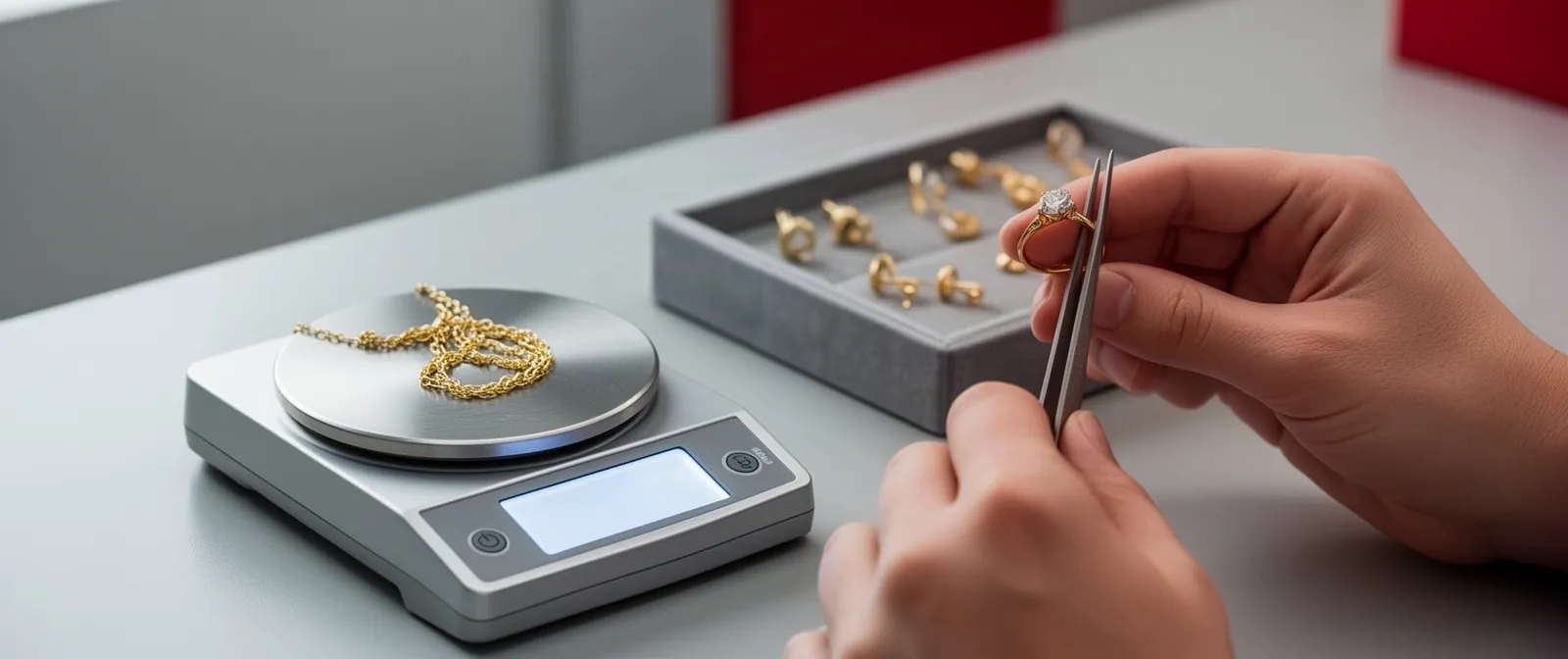
We accept 375 items as collateral and for buyout. Appraisal happens in front of you: the specialist checks the hallmark, weighs the item and determines the composition with an analyzer. No acid or scratches are used, so the jewelry isn't damaged. You can get a preliminary estimate by photo on WhatsApp — just send an image of the hallmark and the item as a whole.
Pledged items are stored in a safe. We pay out in cash or to a Kaspi card. If you decide to sell the item right away, the buyout is at the price on the appraisal day, about 10% above the loan amount. For 375 that's 20 600 ₸/g for a loan and about 22 660 ₸/g for buyout. The exact amount depends on weight and confirmed purity.
We operate under an ARDFM license, with 6 24/7 branches open in Almaty. You can come at any time; appraisal takes a few minutes. If the item has tarnished or lost its shape, that won't prevent acceptance: we appraise the metal by purity and weight, not by appearance.